Rodent infestations in crawlspaces and roof voids inevitably transition into biological hazards directly above living areas. In older Upstate home pockets like North Main, Overbrook, and Alta Vista, mature tree…
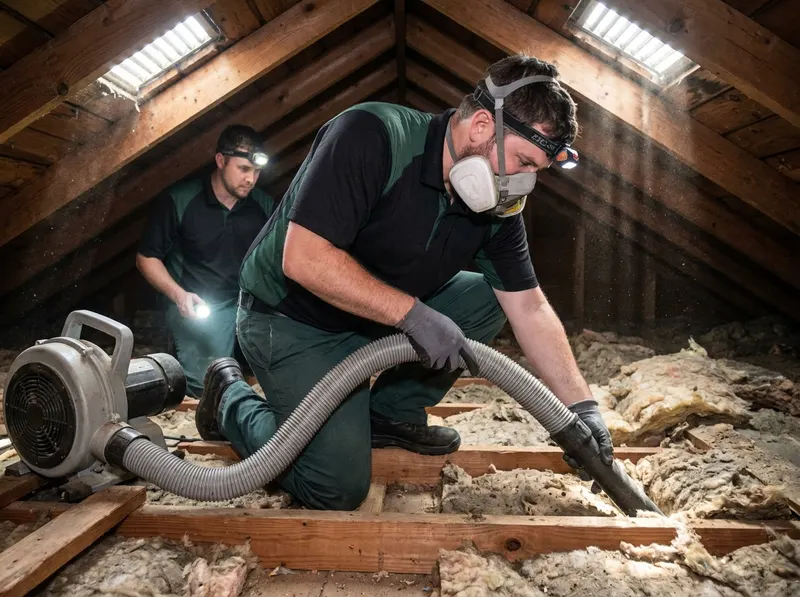
Rodent infestations in crawlspaces and roof voids inevitably transition into biological hazards directly above living areas. In older Upstate home pockets like North Main, Overbrook, and Alta Vista, mature tree canopies grant roof rats and gray squirrels immediate access to fascia lines, louvered gable vents, and ridge cap joints. When rodents nest within attic insulation, biological debris degrades thermal efficiency while circulating contaminated particulate downward through ceiling penetrations and recessed light fixtures. The remediation process begins by deploying industrial negative-air HEPA vacuums that capture airborne hantavirus, leptospirosis, and mite vectors before contaminated material crosses the home threshold, following ventilation containment standards established by the Occupational Safety and Health Administration.
Technicians proceed systematically to eliminate structural ingress points across the roof perimeter. Following raw waste extraction, the open roof floor receives direct treatment using dual-action bactericides registered by the Environmental Protection Agency to neutralize biological pathogens and pheromone markers without chemical volatilization into living quarters. Framing gaps, wire chases, plumbing stacks, and soffit edges are sealed with metal mesh and expanding polyurethane foam adhering to construction specifications outlined in the International Residential Code. Homes throughout Augusta Road, Gower Estates, and Parkins Mill frequently present broken chimney chase pans and uncapped ridge lines that necessitate tailored sheet metal flashing to prevent secondary entry by wood-boring insects or bats protected under the U.S. Fish and Wildlife Service guidelines.
Restoring thermal performance requires calculating structural heat transfer requirements established by the U.S. Department of Energy, which specifies a baseline of R-38 for ceiling assemblies in Greenville County climate zone 3. RavenCrest Insect Control installs borate-treated loose-fill cellulose, which naturally resists pest harborage and carries Class A fire-resistant properties evaluated by the ASTM International technical standard E84. This dense-pack application simultaneously insulates ductwork, reduces thermal exchange loads according to recommendations by the American Society of Heating, Refrigerating and Air-Conditioning Engineers, and limits attic moisture accumulation tracked by the South Carolina Department of Health and Environmental Control. All structural materials removed during the project undergo disposal in compliant municipal facilities monitored by the Greenville County Solid Waste Division.
Homeowners navigate the complete restoration through four distinct procedural stages:
Property owners can schedule an on-site diagnostic review by calling (864) 215-5119, or text a photo of accessible attic entry points for initial baseline evaluation.
Every job gets a firm, written price after an on-site visit.
Tell us about your attic sanitation and insulation restoration job in Greenville and we'll send a clear, written quote, usually the same day.
 RavenCrest Insect Control