RavenCrest Insect Control provides targeted pest control service in Greenville, systematically sealing entry voids and applying precise biological barriers across Upstate properties. Subterranean moisture gradients along the Reedy River and clay foundations throughout Greenville County generate heavy insect pressure that requires clinical, structural-grade abatement rather than indiscriminate broadcast sprays.
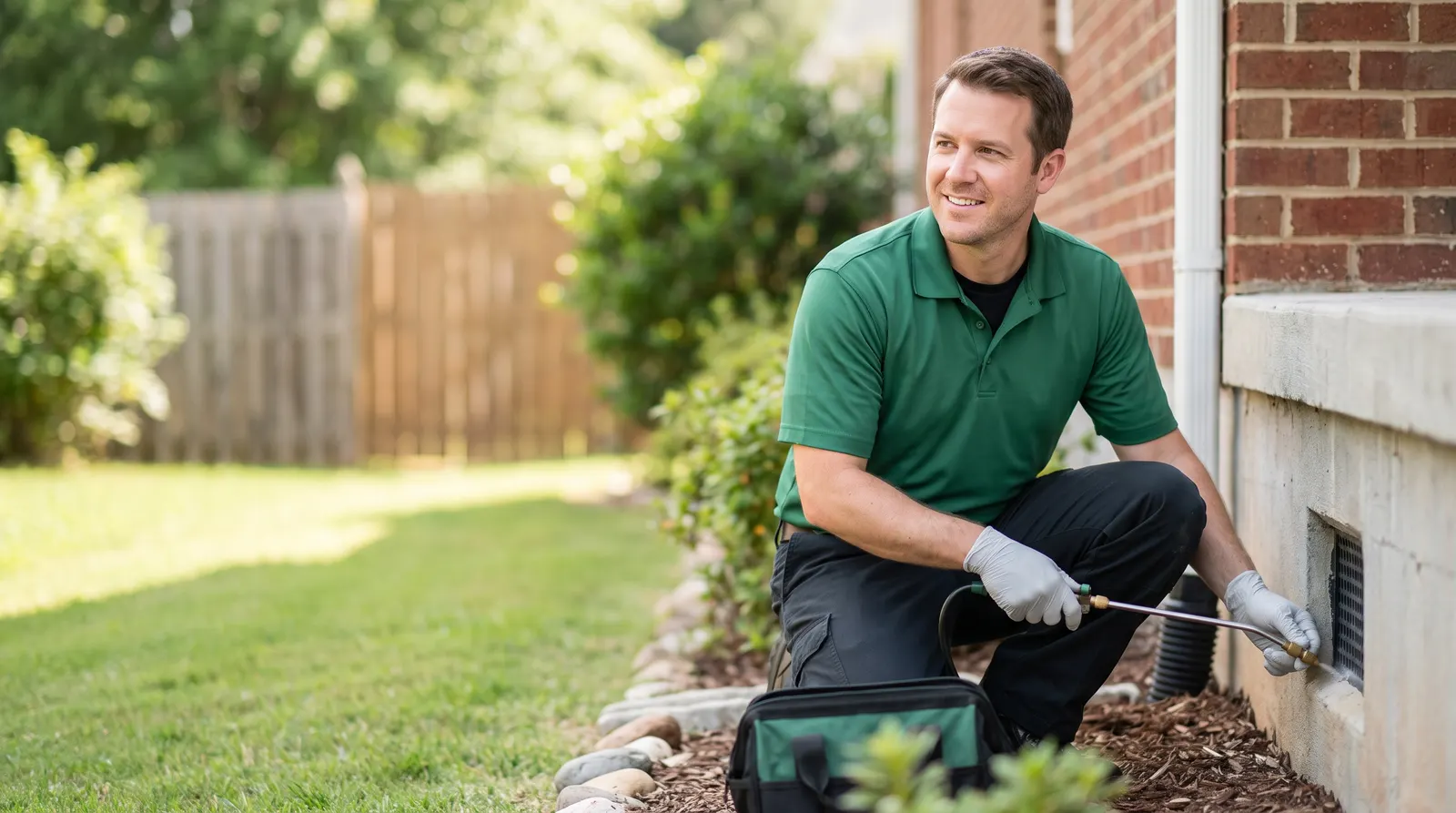
A professional pest control service in Greenville is a targeted architectural and biological management process that eliminates wood-destroying, stinging, and disease-vector insects from local residential structures using targeted perimeter barriers, mechanical exclusion, and micro-injected applications.
Every service reflects the same meticulous attention to detail, whether it's a single job or a larger pest control sevice project across Greenville.
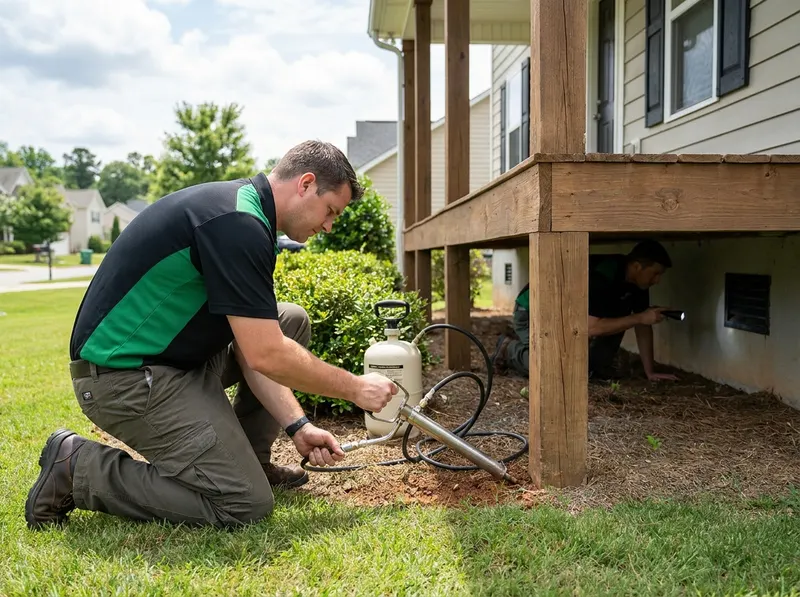
Subterranean termites exploit foundation gaps, plumbing penetrations, and crawlspace dampness across Upstate structures. Technicians install liquid non-repellent barriers along foundation footings and deploy perimeter monitoring stations spaced precisely at 10-to-15-foot intervals. Targeted micro-injections directly access infested sill plates and wall studs to eradicate wood-boring colonies without widespread interior destruction. Our technicians follow structural clearance guidelines from the National Pest Management Association , digging continuous 6-inch by 6-inch trenches through dense red clay around all support piers. Non-repellent active chemistries bind tightly with clay particles, creating an undetectable chemical treated zone. When worker termites traverse treated soil, they transfer the active material back through their underground nest networks, eliminating reproductive queens within 60 to 90 days. Every treated structure receives comprehensive annual acoustic and thermal imaging inspections to verify complete barrier integrity.
Get a quote →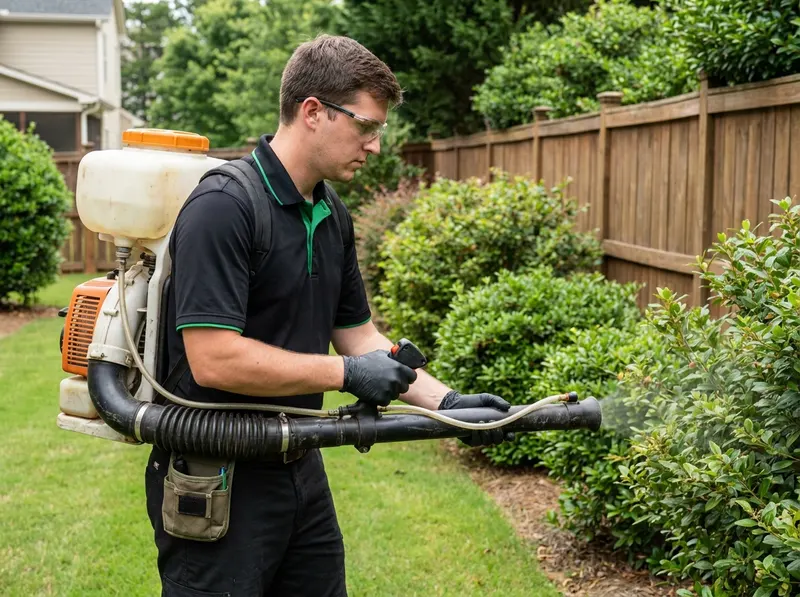
Dense deciduous foliage and warm humidity create active breeding conditions across Greenville County from late spring through early autumn. Exterior foliage misting deposits botanical adulticides and biological insect growth regulators beneath broadleaf trees, shaded shrubs, and perimeter fence lines. Larvicide briquettes containing Bacillus thuringiensis israelensis are applied directly to non-draining catchment zones and gutter troughs to neutralize breeding cycles at the source. Barrier applications specifically target the underside of broadleaf foliage where female mosquitoes rest during high daytime heat, avoiding flowering botanicals to safeguard active pollinators as outlined by the Pollinator Partnership . Monthly misting cycles administered from May through October disrupt larval development stages, preventing adult emergence and reducing local disease vectors including West Nile virus and Eastern equine encephalitis without generating persistent aerosol drifts into neighboring properties.
Get a quote →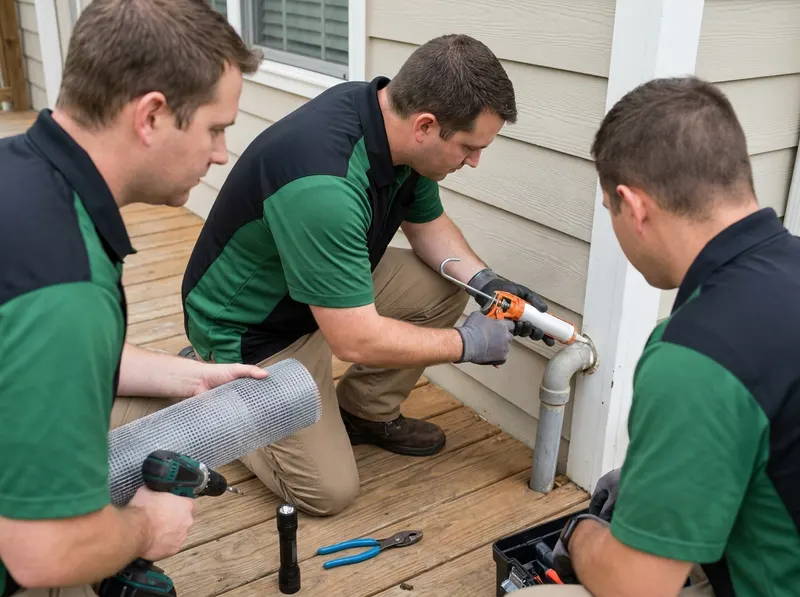
Roof rats and house mice exploit attic eaves, ridge vents, and foundation louvers seeking warmth when temperatures drop. Technicians seal structural gaps larger than one-quarter inch using heavy-gauge welded wire mesh, metal flashing, and elastomeric sealants. Sanitary snap-trap systems are placed in unexposed void spaces to capture interior populations without leaving hazardous poisoned carcasses inside wall partitions. Inspection protocols examine all exterior utility conduit junctions, air conditioning chases, and architectural brick frieze boards where settling creates covert ingress points. Trapping sequences are configured strictly along identified travel runways marked by sebum rub trails and fecal deposits, adhering to humane containment standards set forth by the National Wildlife Control Operators Association . Post-exclusion protocols include replacing soiled insulation batting and misting specialized enzymatic biocides to eliminate pheromone trails that attract subsequent rodent colonies.
Get a quote →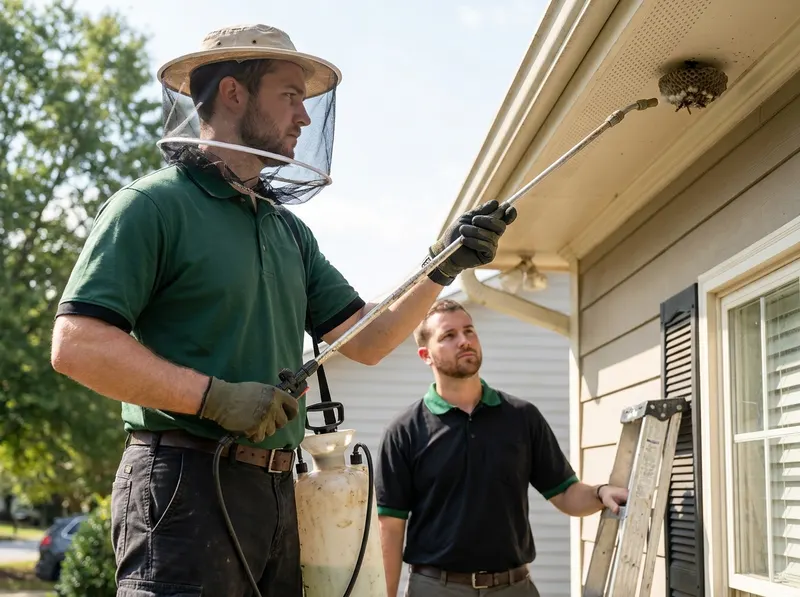
Paper wasps, yellow jackets, and bald-faced hornets establish nests beneath porch eaves, exterior soffits, and underground yard cavities. Technicians apply directional aerosol knockdowns and residual dusts straight into entry points to neutralize active colonies while preventing territorial re-colonization. Structural nesting remnants are physically scraped away and the contact substrate is washed clean. Ground-nesting yellow jacket colonies nesting in dormant root systems near patios receive localized pressurized formulations that penetrate subterranean chambers without destabilizing surrounding landscape soil. Elevated nests positioned along multi-story roof gables are treated using specialized extension equipment, eliminating ladder impact risks on delicate siding. Post-treatment residual applications coat attachment substrates with botanical deterrents that discourage new queens from establishing replacement comb structures during secondary late-summer mating flights.
Get a quote →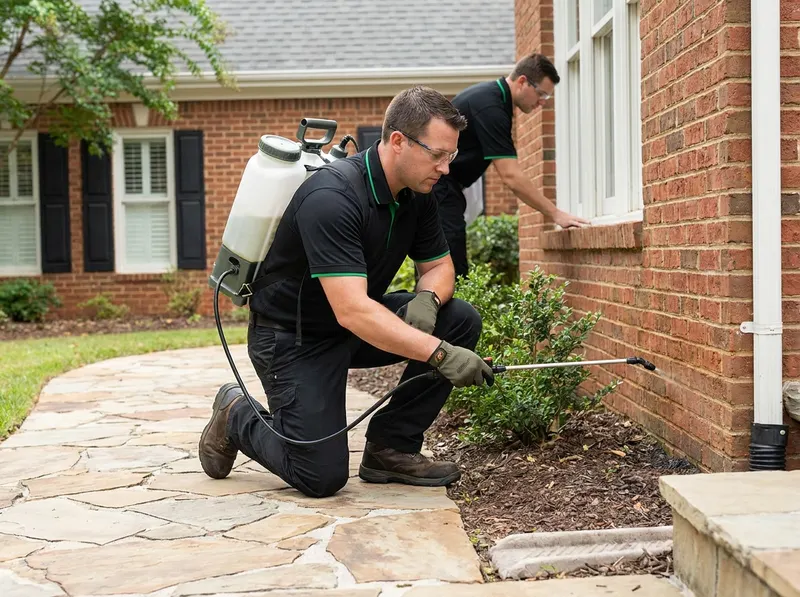
Smokybrown cockroaches and Argentine ants cross foundation thresholds seeking kitchen moisture and organic detritus. Protocols combine a 3-foot vertical liquid application on exterior brick with granular bait dispersal throughout mulch borders and landscape beds. Interior management utilizes specialized gel baits deposited directly inside cabinet hinge recesses, void penetrations, and appliance motors. Granular baits incorporate hydramethylnon or indoxacarb, exploiting social grooming behaviors within ant superswarms to collapse satellite brood queens throughout extensive lawn networks. For smokybrown and American cockroaches breeding in municipal water meters or landscape railroad ties, technicians apply microencapsulated suspensions that withstand intense sunlight and rainfall. Foundation expansion joints, garage door weatherstripping, and sliding glass door thresholds receive targeted dry siliconized dust treatments to intercept foraging scouts before indoor trailing patterns materialize.
Get a quote →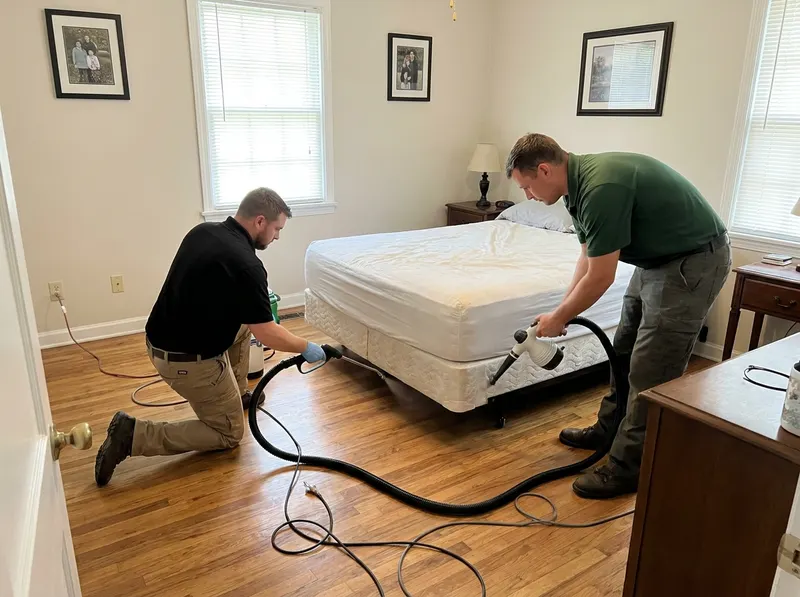
Infestations of common bed bugs hide in mattress seams, baseboard channels, and electrical boxes, causing nightly bites and psychological distress. Rooms are treated using targeted vacuum extractions, desiccating dust formulations inside wall outlets, and perimeter contact residuals along tack strips. Infested materials are clinically isolated so surrounding living rooms remain completely sterile and protected. Technicians employ specialized HEPA-filtered vacuum units to physically extract adult bed bug clusters, nymphs, and cast skins from deep tufted crevices and box spring undersides. Desiccating amorphous silica dust is precision-injected behind switch plates, baseboard moldings, and decorative crown moldings where liquid contact sprays cannot safely penetrate. This dual mechanical and desiccant approach strips the protective waxy epicuticle from bed bug exoskeletons, inducing rapid dehydration and complete mortality across both pesticide-resistant strains and newly hatched instars.
Get a quote →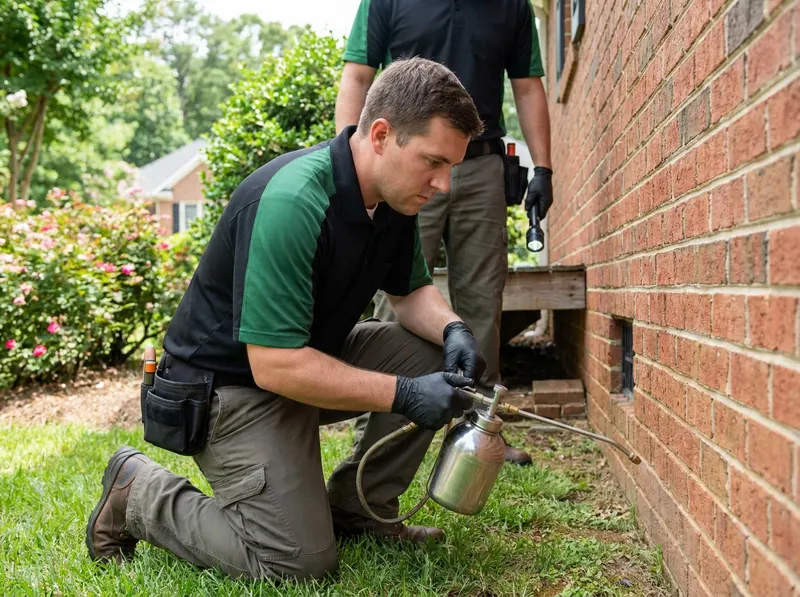
Wolf spiders, black widows, and centipedes migrate into finished basements, garages, and low crawlspaces during transition months. High-reach web sweeps clear exterior fascia, window casings, and crawlspace vents while removing dormant egg sacs. Liquid pyrethroid applications intercept crawl pathways, eliminating the secondary insect populations that serve as the spiders' primary food source. Structural basements and crawlspace foundation sills are treated using non-staining micro-suspensions that adhere directly to concrete masonry units and rough-sawn lumber. Specialized sticky monitoring stations positioned discreetly behind water heaters, sump basins, and storage shelving track residual populations and confirm perimeter interception rates. Eliminating silverfish, pillbugs, and fungus gnats through targeted indoor moisture management deprives predatory arachnids of prey, forcing them out of domestic areas and terminating indoor breeding cycles permanently.
Get a quote →High ground moisture under historic Upstate foundations invites both wood-destroying white rot fungi and moisture-loving wood roaches. Technicians lay continuous 10-mil polyethylene vapor retarders across crawlspace soil, sealing all seams with heavy industrial poly tape. Targeted borate mineral sprays are applied straight to floor joists and subflooring to preserve structural integrity against rot and wood-infesting beetles. Polyethylene membranes are secured directly to perimeter foundation walls with heavy-duty masonry anchors, preventing damp red clay soil gases from evaporating into subfloor structural framing. Framing lumber receives high-concentration disodium octaborate tetrahydrate sprays that diffuse deep into cellulose pores, immunizing structural timbers against both active powderpost beetle infestations and subterranean decay fungi. Technicians inspect foundation perimeter crawlspace vents, clearing debris blocks and optimizing passive cross-ventilation to stabilize seasonal indoor relative humidity levels below 60 percent.
Get a quote →You get a firm, itemized quote for your pest control sevice before any work begins, no surprises, no pressure.
Careful prep, tidy work, and a full cleanup when we are done. We treat your home and belongings like our own.
The same trusted, background-checked team from the first call to the final check.
Selecting the proper treatment protocol depends directly on pest morphology, nesting location, and structural vulnerabilities. If you observe localized exterior foragers like Argentine ants along foundation weep screeds or mud daubers beneath soffits, choose quarterly exterior barrier maintenance to halt migration before interior intrusion occurs. If you detect wood shavings, hollow timber acoustics, or mud shelter tubes along crawlspace piers, choose targeted subterranean termite baiting and liquid trenching protocols immediately to prevent load-bearing frame destruction. The trade-off centers on upfront mechanical labor versus remediation scope: perimeter management requires minimal property disruption and modest quarterly operational investment, whereas structural timber or attic interventions demand invasive physical access, precise insulation clearances, and higher upfront remediation costs.
When structural conditions involve high crawlspace relative humidity exceeding 70 percent, surface chemical sprays fail because fungal rot and moisture-seeking wood borers continue to deteriorate subfloor assemblies. In those specific scenarios, pairing mechanical crawlspace vapor encapsulation with targeted borate wood treatments provides long-term preservation, whereas chemical-only topical sprays yield temporary adult mortality while leaving larvae insulated inside moist structural joists. Similarly, addressing sudden rodent ingress through rooflines requires architectural exclusion with rigid copper mesh and galvanized steel flashing; attempting to solve a severe roof rat intrusion strictly with rodenticide bait blocks creates off-target wildlife risks and leads to inaccessible animal mortality within interior drywall partitions. Choosing non-chemical mechanical exclusion demands higher initial labor investment, yet eliminates persistent seasonal re-infestations. Every protocol adheres to environmental criteria published by the United States Environmental Protection Agency to guarantee targeted pest knockdown without unnecessary interior exposure. Structural management proceeds in an orderly five-stage operational progression: Step 1 establishes a comprehensive diagnostic audit of exterior foundation weep lines and crawlspace moisture. Step 2 executes mechanical sealing of all detected penetrations greater than one-quarter inch. Step 3 installs non-repellent liquid soil barriers along structural foundation footers. Step 4 applies biological insect growth regulators and low-toxicity micro-injections directly into identified void pockets. Step 5 institutes scheduled 90-day perimeter verification audits to disrupt recurring emergence cycles across seasonal transitions.
Every project gets a firm, written price after an on-site visit. Ranges below for orientation.
Tell us about your pest control sevice job and we'll send a clear, written quote, usually the same day. Or just call and talk to a real Greenville pro.
(864) 215-5119
Greenville properties encounter unique biological challenges due to the dense canopy bordering Paris Mountain State Park and the persistent moisture levels generated along the Prisma Health Swamp Rabbit Trail and Cleveland Park. Historic homes built along Augusta Road and Alta Vista frequently feature fieldstone or damp brick foundations that attract subterranean termite colonies, while heavily landscaped suburban grounds in Botany Woods foster active mosquito microclimates throughout the summer. These native soil, tree, and humidity conditions demand calculated chemical placement and physical architectural sealing rather than passive, surface-level spraying. Subterranean moisture dynamics across Greenville County are profoundly shaped by native Cecil clay soils. This heavy, iron-rich red clay expands when saturated by intense seasonal storms and contracts during mid-summer dry spells, forming foundation fissures along brick footings and slab perimeters in historic West End cottages and established mid-century brick ranches in Gower Estates and Parkins Mill. Subterranean termites utilize these foundation micro-cracks, tracking continuous moisture up through masonry voids into structural heartpine framing. Because red clay possesses dense compaction characteristics and slow drainage rates, topical surface chemicals run off rapidly instead of binding to soil particles, making sub-surface pressurized trenching directly down to the foundation footers essential for true perimeter protection. Vegetation corridors across the Upstate introduce additional entomological pressures. The mature hardwoods, river birch, and dense mountain laurel canopies surrounding Falls Park on the Reedy and Bob Jones University campus cast continuous shade over residential roofs and low foundation crawlspaces. This heavy shade retards natural dew evaporation, creating sustained 75-to-90 percent humidity zones beneath foundation skirts in North Main and Overbrook. Argentine ants and odorous house ants establish supercolonies under decomposing river birch mulch and timber retaining walls, using overhanging oak branches to access roof gutters, fascia boards, and attic ridge vents. Furthermore, seasonal flood events along tributary creeks of the Reedy River drive rodent populations from riparian burrows into domestic crawlspaces, seeking elevated, dry nesting territory inside floor insulation. Managing pests across these diverse Upstate microclimates requires deep architectural awareness of older crawlspace construction, targeted botanical treatments aligned with local waterways, and precise mechanical closure of roofline gaps. Homeowners facing sudden wildlife or insect intrusions can coordinate professional pest remediation by contacting local county conservation and vector guidance resources through the Greenville County Official Government portal or consulting regional pest trends via the Clemson Cooperative Extension Home & Garden Information Center.
 RavenCrest Insect Control